KnoWhy #845 | March 24, 2026
Why is the Passover Important for Understanding Easter?
Post contributed by
Scripture Central
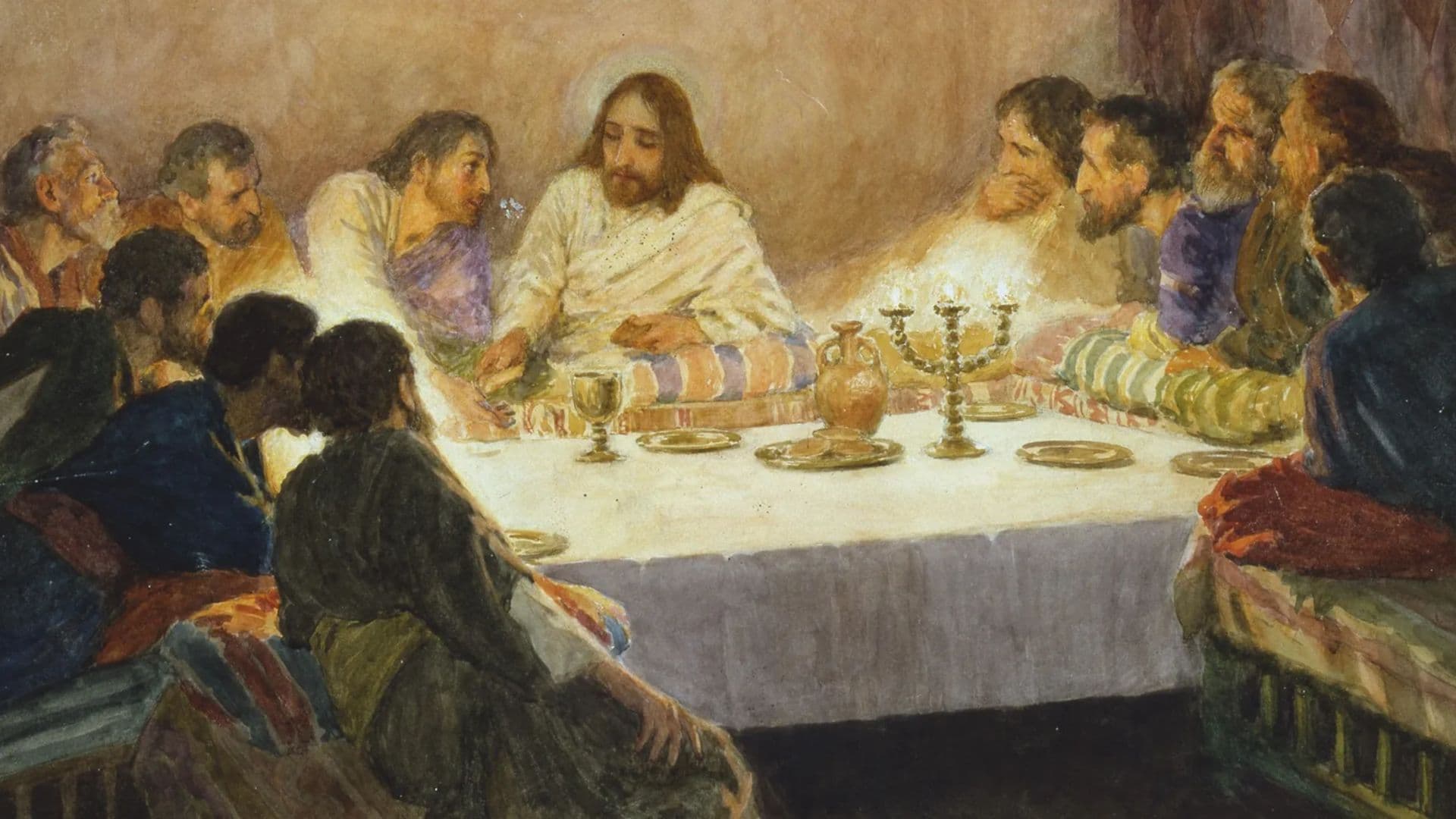
“It is the sacrifice of the Lord’s passover, who passed over the houses of the children of Israel in Egypt, when he smote the Egyptians, and delivered our houses.” Exodus 12:27
The Know
Sometimes, Old Testament rituals like those surrounding the Passover may seem to have little to do with Christianity, and some Christians may struggle to make sense of rituals which seem so foreign. However, for early Christians as reflected in the Gospel of John, the Passover provided a framework for understanding the significance of the suffering, death, and resurrection of Jesus, in which the salvation from physical death related to the salvation of mankind from all forms of death through Christ.
The first Passover, as recorded in Exodus 12, was held just prior to the Hebrews departing from Egypt. For this sacred meal, they killed a lamb, making sure not to break a bone, and brushed its blood on the lintels and doorposts of their houses using a plant called hyssop. Yahweh would then “pass over” those houses painted with the blood of the lamb, but the firstborn of all those houses without the blood on the door would die. This act would be the one that finally freed the Hebrews from Egypt, as it was the only event that spurred the Pharaoh to let them go.
One of the first similarities between the Passover and the death of Christ has to do with timing. According to the synoptic gospels, the Last Supper, which Jesus ate with His disciples, was a Passover meal, which inaugurated the week-long Feast of Unleavened Bread. They would have sacrificed a lamb and ensured that leaven, or yeast, was removed from their gathering place prior to sundown when they ate their meal. This means that Jesus’s death the following day was still the first day of the Feast of Unleavened Bread and part of the Passover season (Mark 1:12; Luke 22:11—days in their culture were counted from sundown to sundown). 1
The Gospel of John 19:14, in contrast, states that Jesus was killed at the sixth hour on the day of the preparation for the Passover, suggesting that Jesus was killed at the same time the Passover lambs were being slaughtered in the temple prior to their meal after sundown.2 Of course, this would mean Jesus’s Last Supper was not the night of Passover, but would have occurred the night before. Regardless, the important thing is that His death coincided with the Passover season. John 1:29 and 36 state that Jesus is the Lamb of God, and this Passover association is at least one explanation for this title.3
Other elements of the Gospel of John also point to this connection. As noted earlier, people preparing the Passover lamb for consumption were not allowed to break any of its bones. This is also true of the Savior. According to the Gospel of John, when Jesus was crucified, the Jewish authorities wanted Jesus and those being crucified to die quickly so their bodies could be taken down before the Passover began (John 19:31). To this end they broke the legs of the men crucified with Jesus, but when they came to break Jesus’ legs, they found that He was already dead (John 19:33). The Gospel of John specifically states that Jesus’ legs were not broken “so that the scripture would be fulfilled, ‘A bone of his will not be broken’” (John 19:36).4
The connection with the Passover also relates to one of the last things that Jesus is recorded as saying when He was on the cross. John 19:28 indicates that Jesus said He was thirsty when He was on the cross, so someone filled a sponge with vinegar, put it on some hyssop, and put it up to His mouth to give Him one last drink. It is significant that the text specifically states that the person used hyssop to give Jesus something to drink. Whereas Matthew and Mark simply mention a "reed" was used, John likely mentions hyssop more specifically to evoke the command to use a sprig of hyssop to smear the blood of the Passover lamb on their doorposts as recorded in Exodus 12:22. John is focused on highlighting the ways many elements of the Passover were fulfilled in Jesus.
The Why
These connections point to some insights into how to understand the crucifixion of Jesus. Just as the blood of the Passover lamb saved the Hebrews from death when it was brushed on their doors, so the blood of Jesus saves all humanity from physical and spiritual death. In addition, the Passover led to the freedom of the Hebrews from bondage to the Egyptians. In the same way, the suffering, death, and resurrection of Jesus lead to all humanity being free from bondage to sin and death.
In this way the Passover can provide insights to Christians everywhere about what the death of Jesus can mean for people today, as President Howard W. Hunter has stated, “With the suffering of Gethsemane, the sacrifice of Calvary, and the resurrection from a garden tomb, Jesus fulfilled the ancient law and ushered in a new dispensation based on a higher, holier understanding of the law of sacrifice.”5
He emphasized, “No more would men be required to offer the firstborn lamb from their flock, because the Firstborn of God had come to offer Himself as an ‘infinite and eternal sacrifice.’ This is the majesty of the Atonement and Resurrection, not just a passover from death, but a gift of eternal life by an infinite sacrifice.”6 Ultimately, these similarities remind readers today that “Christ our passover is sacrificed for us” (1 Corinthians 5:7).
Howard W. Hunter, “Christ, Our Passover,” Ensign, April 1985.
Rebecca Reynolds Lambert, "Our Faithful Lord: Passover to Easter." Interpreter: A Journal of Latter-day Saint Faith and Scholarship 51 (2022): 81-104.
Donald W. Parry, “Striking Blood on the Doorposts: The Passover Anticipates Jesus Christ,” in The Jesus Christ Focused Old Testament: Making Sense of a Monumental Book (Book of Mormon Central, 2022), 1102–1103.
- 1. For a discussion, see Cullen I. K. Story, “The Bearing of Old Testament Terminology on the Johannine Chronology of the Final Passover of Jesus,” Novum Testamentum 31, no. 4 (1989): 316–24.
- 2. For more on this issue, see Jeffrey R. Chadwick, “Dating the Death of Jesus Christ,” BYU Studies Quarterly 54, no. 4 (2015): 135–91.
- 3. Joseph Tabory, “The Crucifixion of the Paschal Lamb,” The Jewish Quarterly Review 86, no. 3/4 (1996): 395–406.
- 4. Sandra M. Schneiders, “The Lamb of God and the Forgiveness of Sin(s) In the Fourth Gospel,” The Catholic Biblical Quarterly 73, no. 1 (2011): 17–18.
- 5. Howard W. Hunter, “Christ, Our Passover,” Ensign (April 1985): 17-19.
- 6. Hunter, “Christ, Our Passover.”