KnoWhy #875 | November 10, 2026
Why is Daniel’s Ability to Interpret Dreams Unique?
Post contributed by
Scripture Central
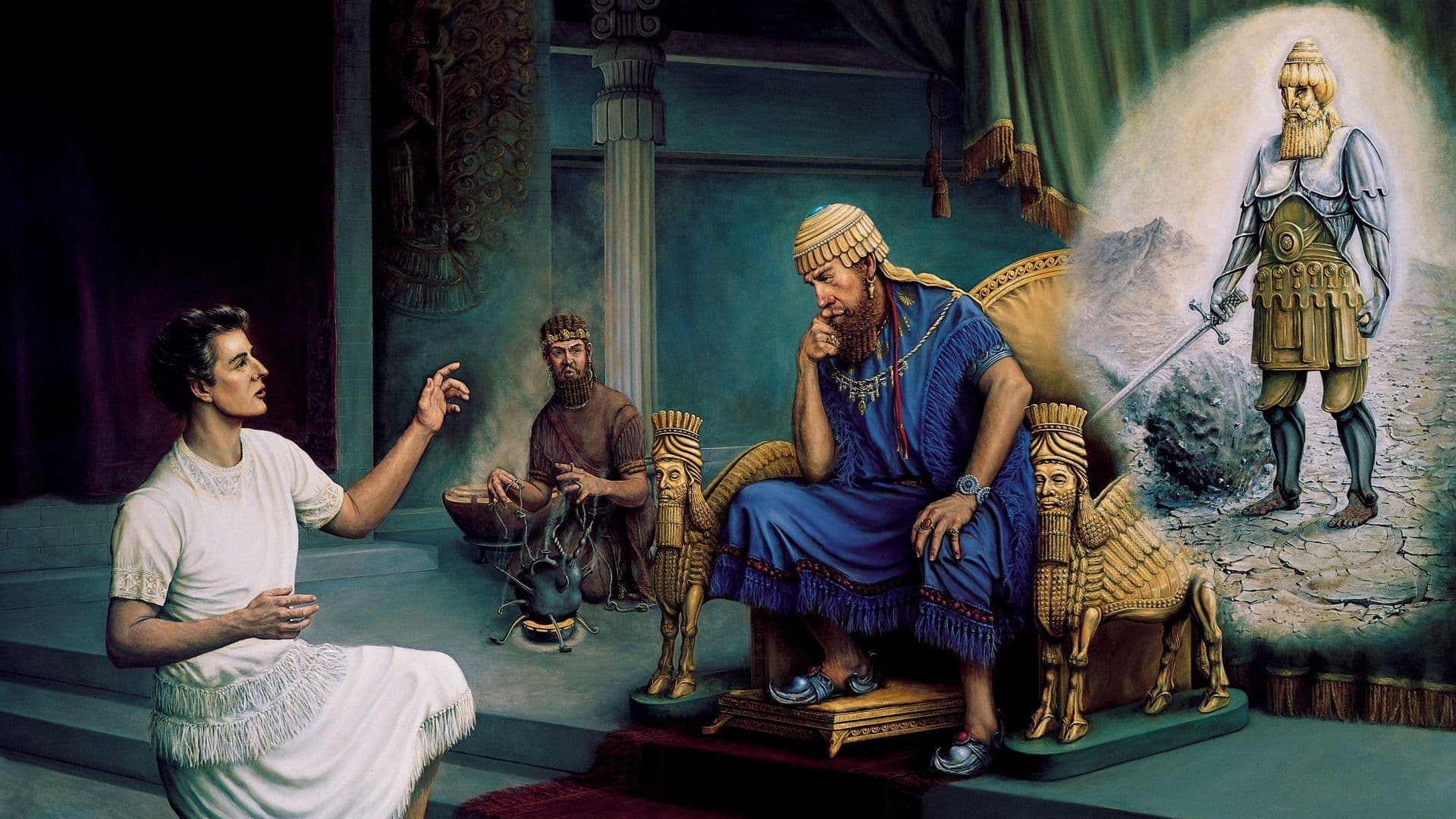
“Then was the secret revealed unto Daniel in a night vision. Then Daniel blessed the God of heaven.” Daniel 2:19
The Know
In Daniel 2:2-5, King Nebuchadnezzar tells his magicians, astrologers, sorcerers, and Chaldeans, to interpret a dream for him. However, he refuses to tell his advisors what his dream was. He wants them to both tell him what he dreamed and interpret it for him. Presumably the king assumes that if they can divine his mind and tell him his dream, they would be able to interpret it by the same power. Daniel does this, even when no one else could (Daniel 2:10, 19). Although this may not seem like a significant miracle compared to others, it is a truly impressive feat when one understands its ancient Near Eastern context.
In the ancient Near East, dream interpretation was not an ad-hoc venture uncovering the meaning of a single dream in isolation. Rather, people attempted to organize dreams and their interpretations and wrote their understandings down in books.1 For example, in the ancient Egyptian Chester Beatty III papyrus, dating from the 19th dynasty,2 many dream oracles are listed. Each begins with the phrase “if a man see himself in a dream…” and ends with the dream and what it means.3 Some are considered good omens: “If a man see himself in a dream: Destroying all his clothes. Good. Releasing him from all ills.”4 Some are considered bad: “If a man see himself in a dream: Bitten by a snake. Bad. It means the occurrence of a quarrel against him.”5 Some seem counter-intuitive to modern readers: “If a man see himself in a dream: His mouth filled with dirt. Good. Living off of his townsmen.”6
This text, along with many others, suggests that if someone had a dream and wanted to know what it meant, they could simply look it up in a book and determine what the future would hold for them.7 However, this was not how things unfolded in the Daniel narrative. The king’s advisors could not simply look up the dream in the book because the king refused to tell them what the dream was. This is why Daniel’s interaction with the king was so significant. Because Daniel relied on the power of God, and not the usual methods, he was able to reveal and interpret the dream, even when nobody else was able to.
Never miss a KnoWhy
Get Scripture Central's latest research and resources delivered straight to your inbox.
The Why
Daniel’s story reminds Latter-day Saints of an important truth: even when all the usual ways of doing things prove fruitless, God can still help his children achieve that which is expedient. Doing something the way everybody else does it and finding it does not succeed can cause people to feel hopeless. However, Daniel’s story reminds its readers that this is not the only response to failure or hopelessness. People can draw on the power of God, and He can help them achieve things they might not have thought possible, just as He did for Daniel.
As Elder Paul B. Pieper has said, “we can choose to trust God today and every day going forward. I promise that each time we do, God will be there to catch us, and our relationship of trust will grow stronger and stronger until the day that we become one with Him and His Son.”8 When unusual, or even seemingly impossible, things need to be done, Latter-day Saints can take strength from Daniel, who knew that God could help with something that seemed impossible to do.
Richard D. Draper, “The Prophets of the Exile: Saviors of a People” in Sperry Symposium Classics: The Old Testament, ed. Paul Y. Hoskisson (Religious Studies Center, Brigham Young University, and Deseret Book 2005), 245–265.
- 1. For an overview, see Kenneth Kitchen, On the Reliability of the Old Testament (Grand Rapids: Eerdmans, 2003), 350.
- 2. Robert K. Ritner, “Dream Oracles” in The Context of Scripture, 3 vols., ed. William W. Halo (Leiden: Brill, 2003), 1:53.
- 3. Robert K. Ritner, “Dream Oracles” in The Context of Scripture, 3 vols., ed. William W. Halo (Leiden: Brill, 2003), 1:53.
- 4. Robert K. Ritner, “Dream Oracles” in The Context of Scripture, 3 vols., ed. William W. Halo (Leiden: Brill, 2003), 1:53.
- 5. Robert K. Ritner, “Dream Oracles” in The Context of Scripture, 3 vols., ed. William W. Halo (Leiden: Brill, 2003), 1:54.
- 6. Robert K. Ritner, “Dream Oracles” in The Context of Scripture, 3 vols., ed. William W. Halo (Leiden: Brill, 2003), 1:53.
- 7. Kenneth Kitchen, On the Reliability of the Old Testament (Grand Rapids: Eerdmans, 2003), 350.
- 8. Elder Paul B. Pieper, “Trust in the Lord,” Ensign, May 2024.